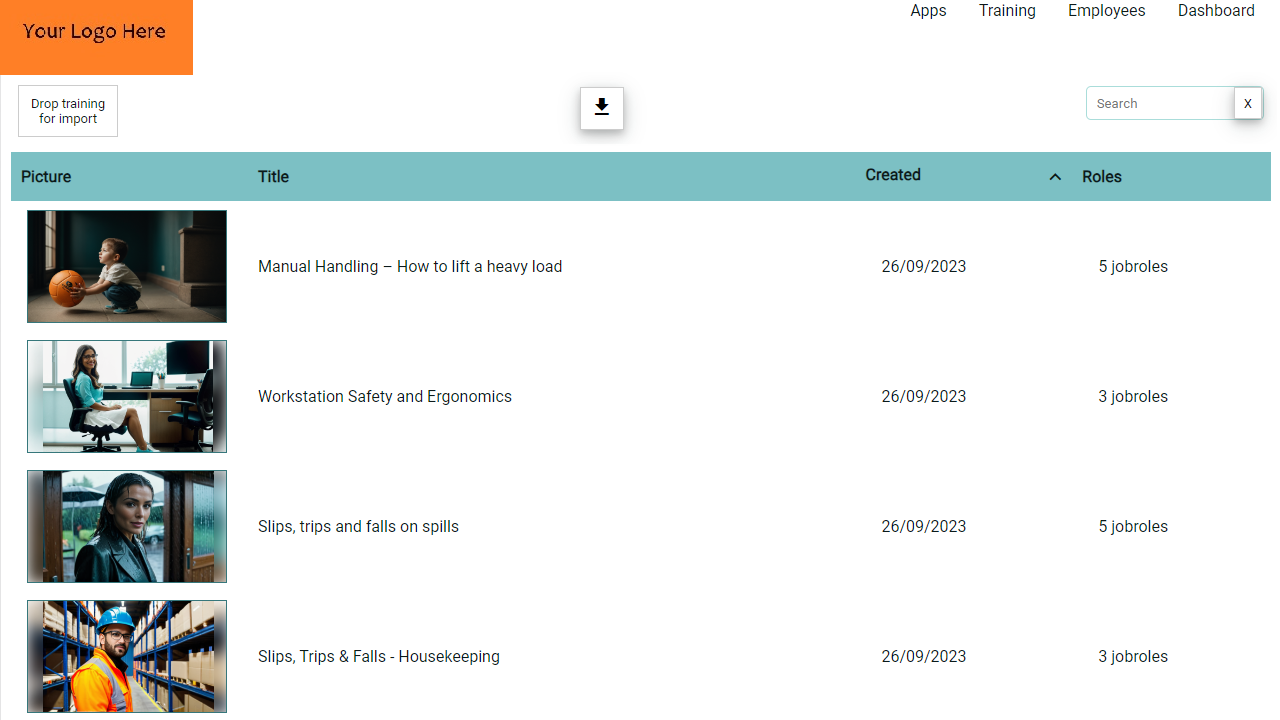
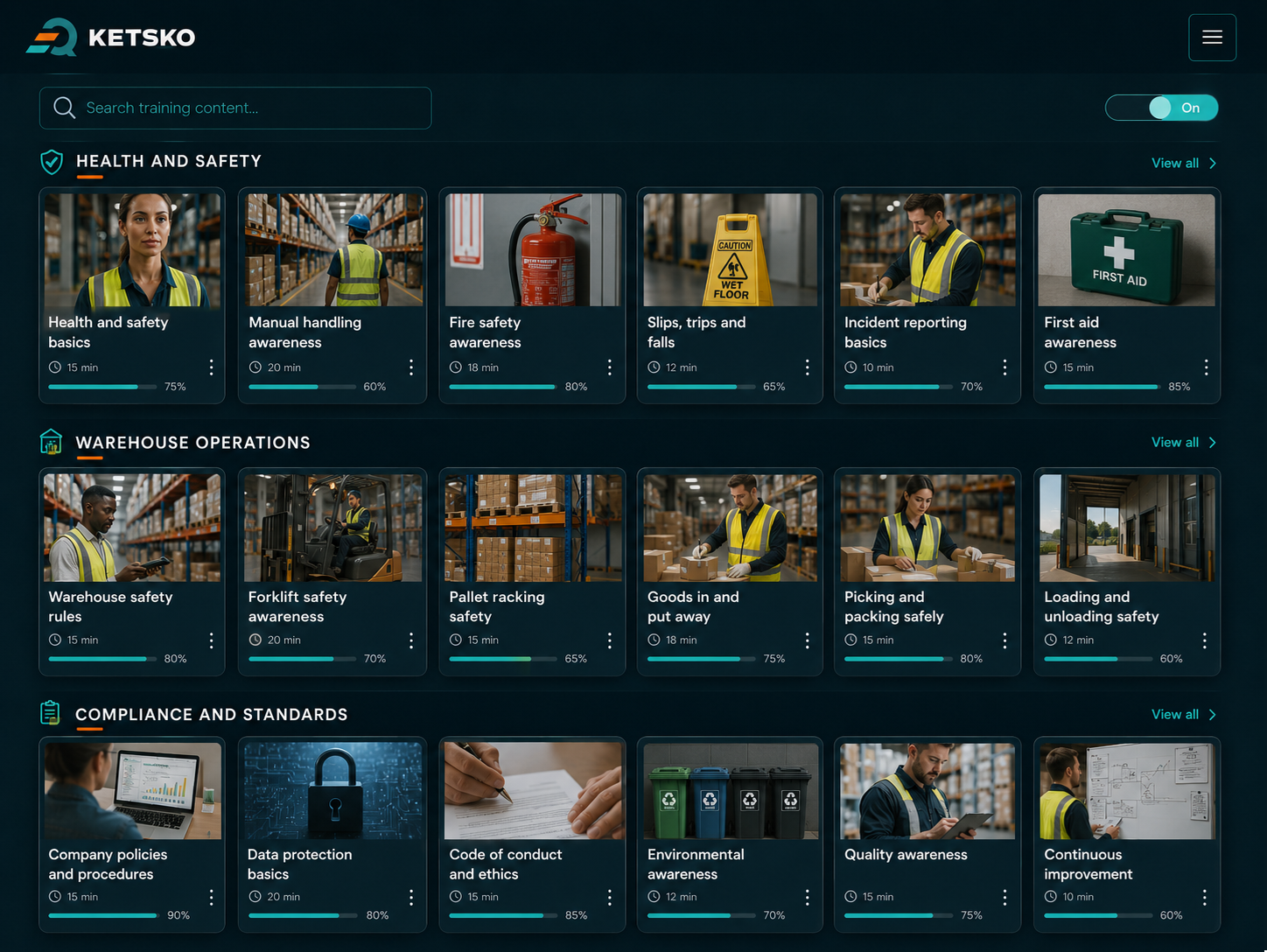
1Use existing SOPs and policies
Turn current procedures and site rules into training activity that can be assigned and tracked.
2Reuse briefings and slides
Convert repeated supervisor briefings or PowerPoint sessions into clearer training routes.
3Fit SCORM where it helps
Use existing eLearning modules where they remain relevant, without making SCORM the whole strategy.
4Add site and customer context
Include the local rules, customer areas and operational methods that generic training often misses.
5Connect to evidence
Make the training route easier to review, follow up and show when records are needed.